Downloads
Resources
Reusable material that matches the current specification (AXI v2.0). Everything is licensed CC BY 4.0: reuse it with attribution to the paper.
Paper and citation
Yeluri S. D. S. Sri Vardhan (2026). Artificial eXperience Intelligence (AXI): An Engineering Discipline for the Human Experience of AI Systems (Version 2.0) [Preprint]. Research Square. https://doi.org/10.21203/rs.3.rs-9717445/v2Diagrams
All six figures from the paper, 1464 px wide. Text explanations of each are on the Bridge, metrics and guardrails pages and in the paper.
| Figure | PNG | WebP |
|---|---|---|
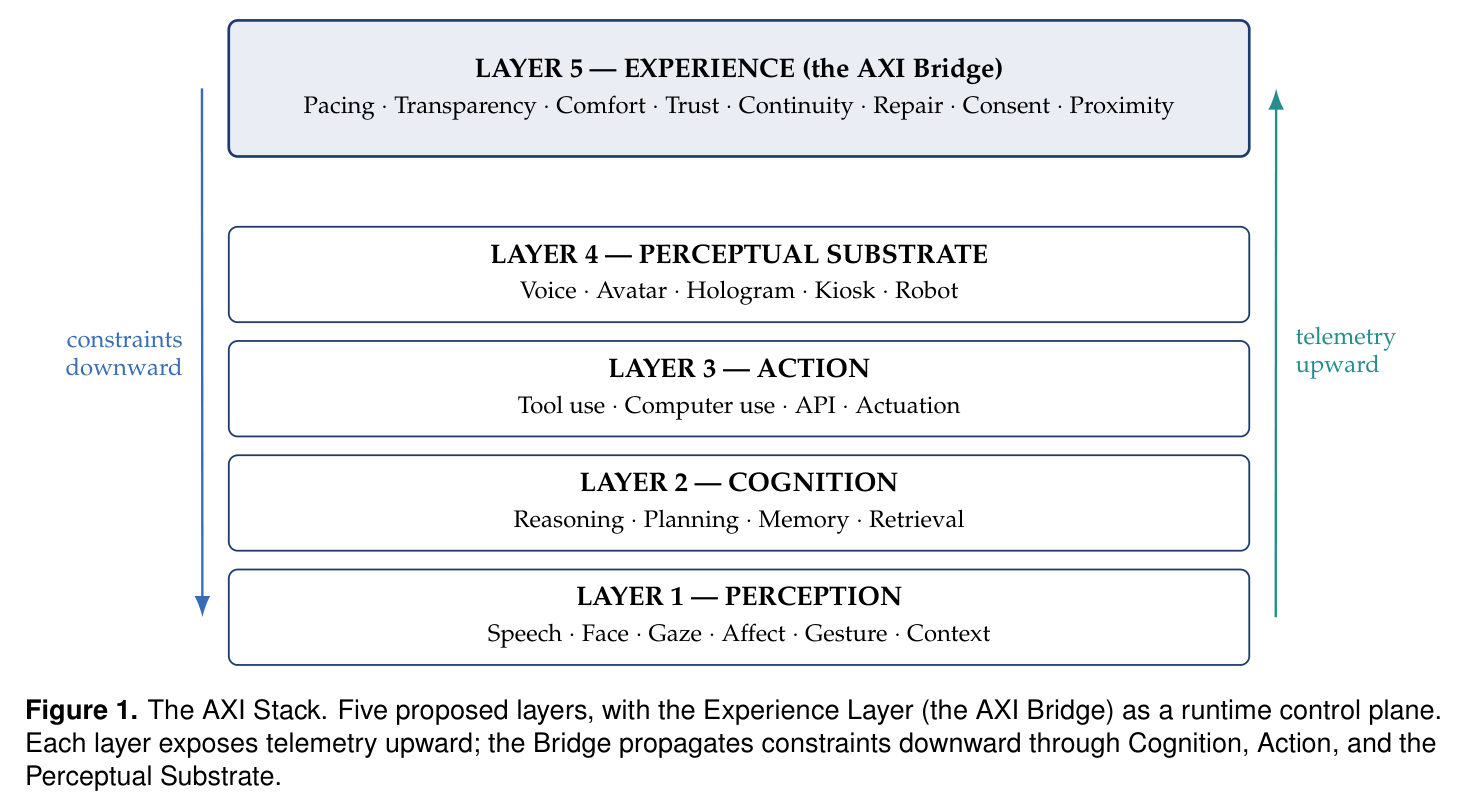
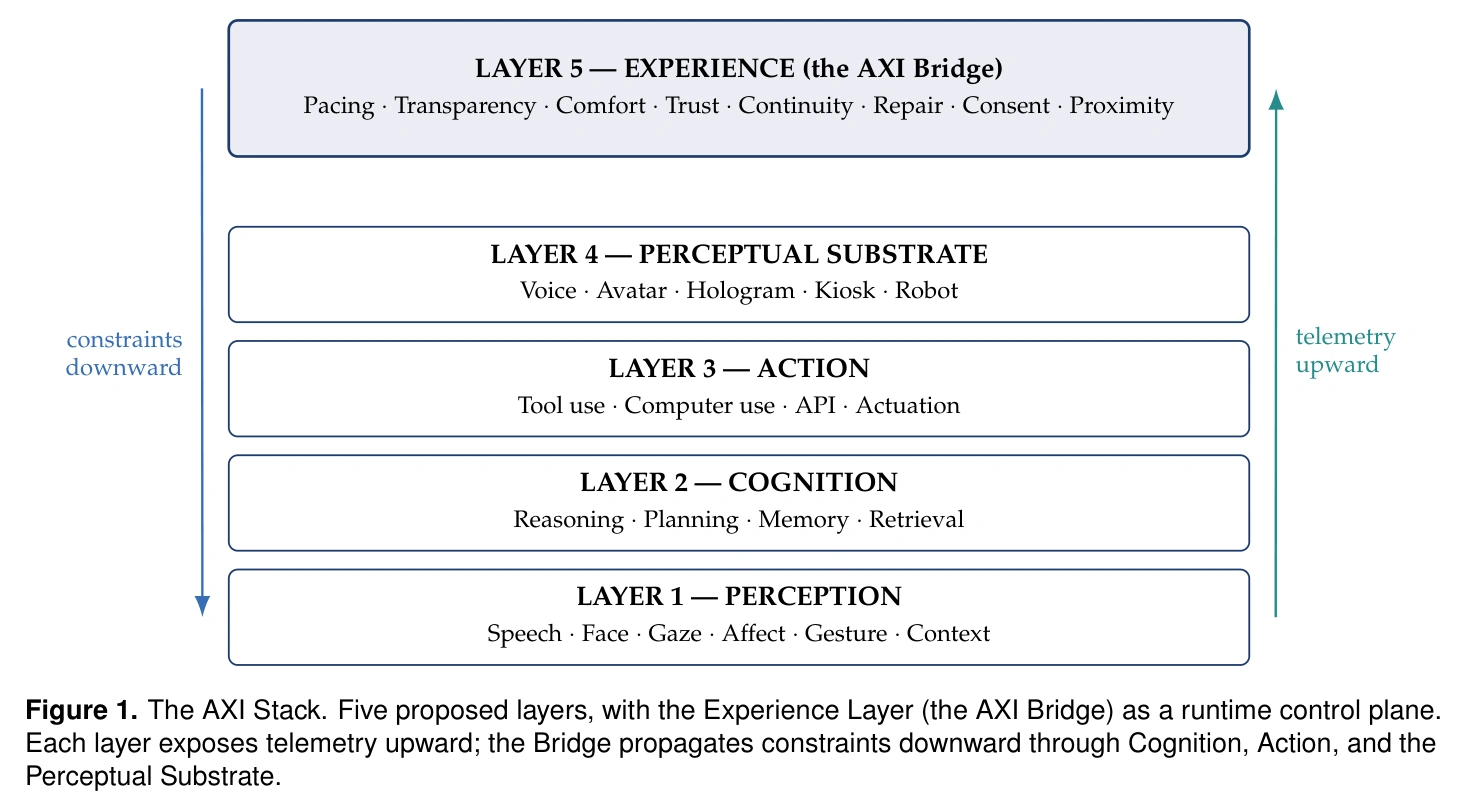
| 1. The AXI Stack (five layers) | figure-1.png | figure-1.webp |
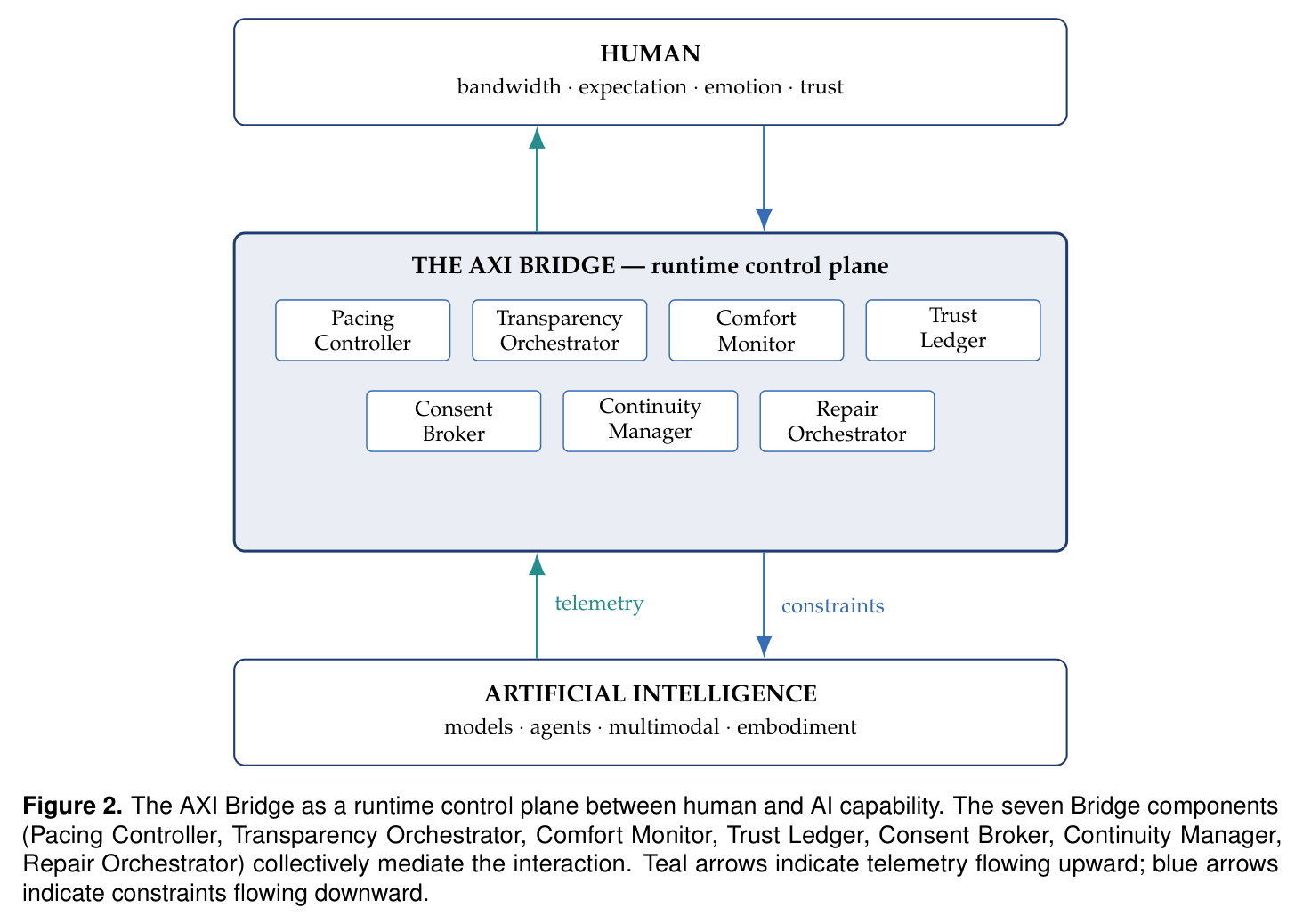
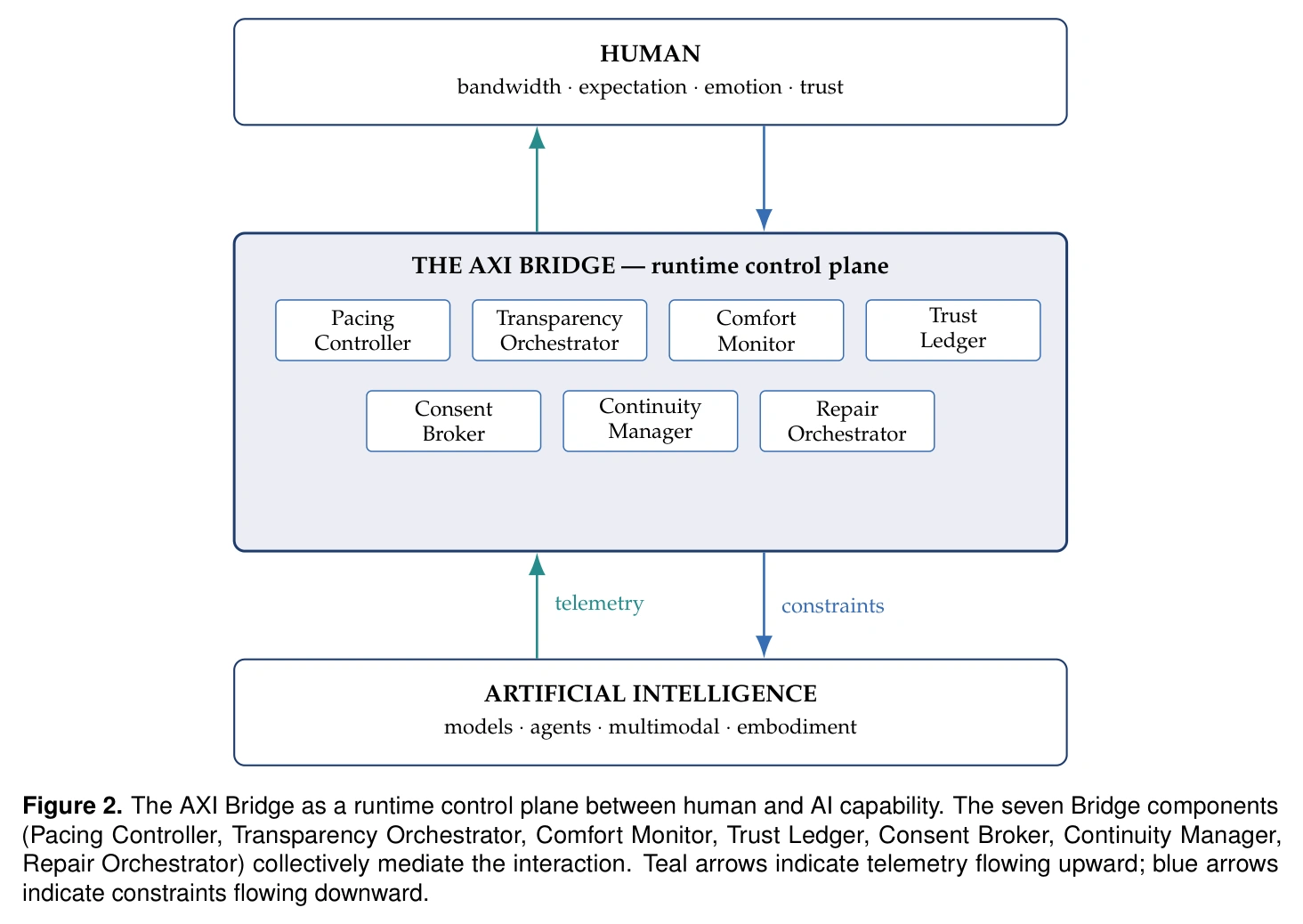
| 2. The AXI Bridge as a runtime control plane | figure-2.png | figure-2.webp |
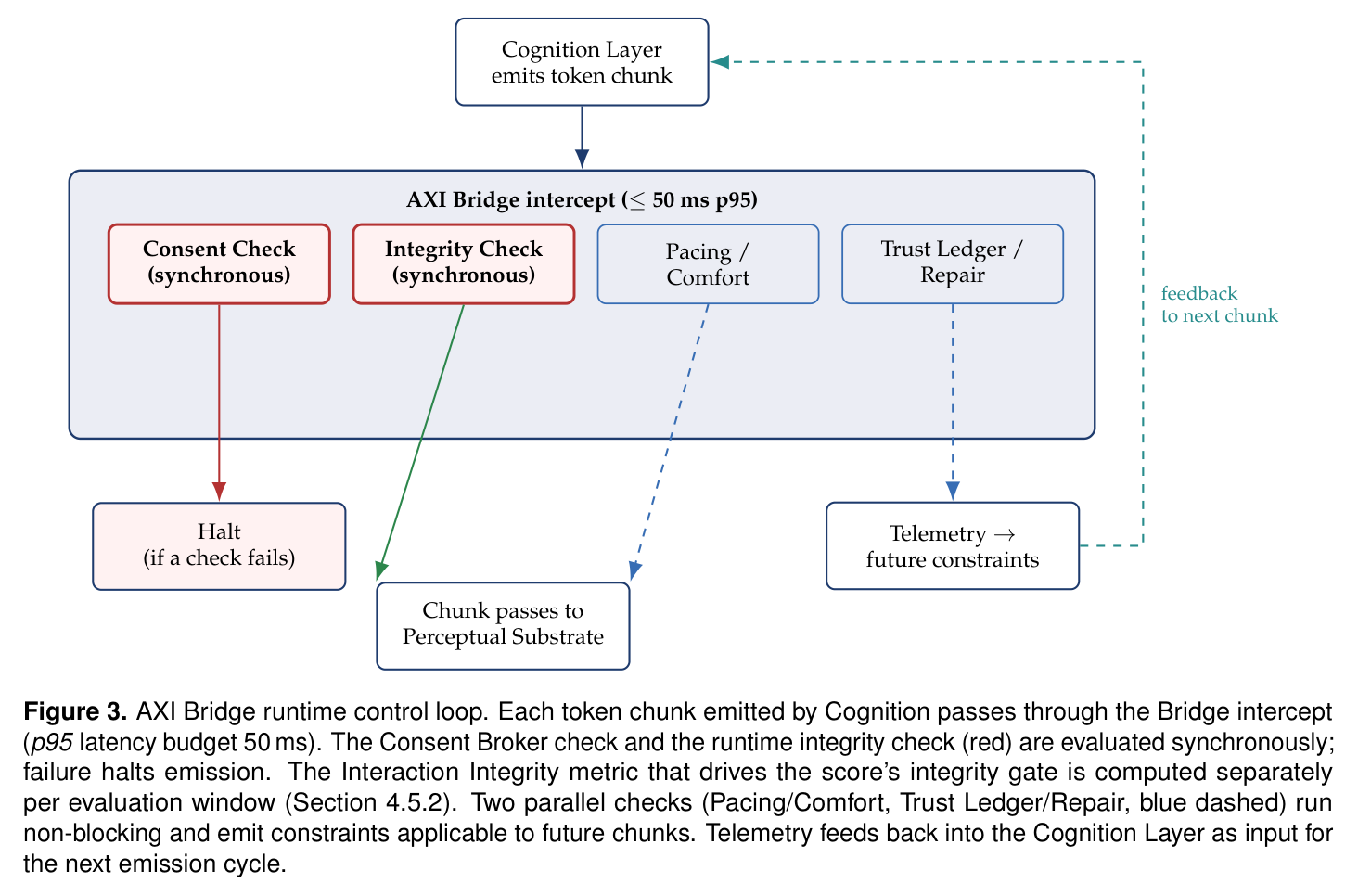
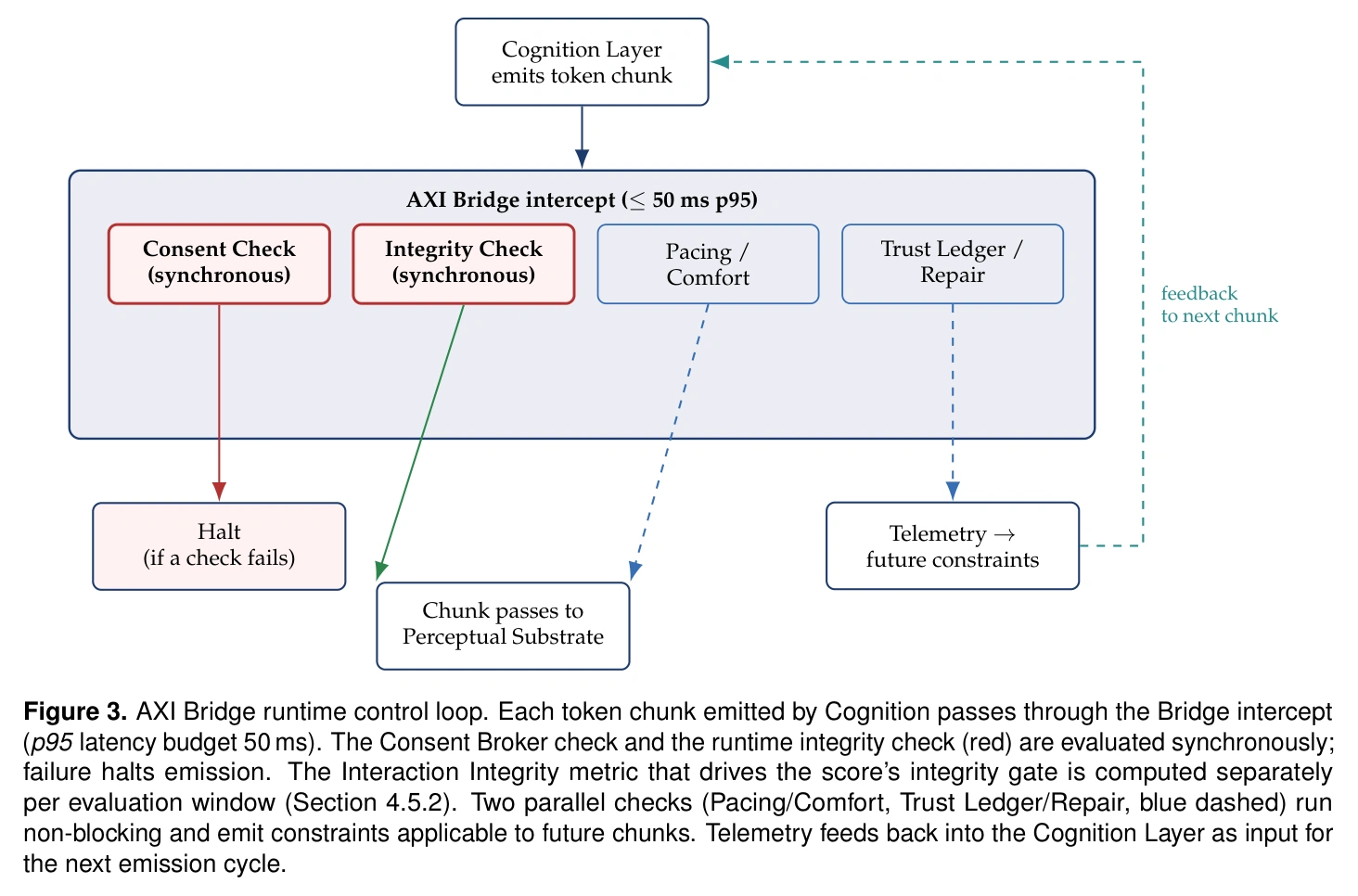
| 3. Bridge runtime control loop | figure-3.png | figure-3.webp |
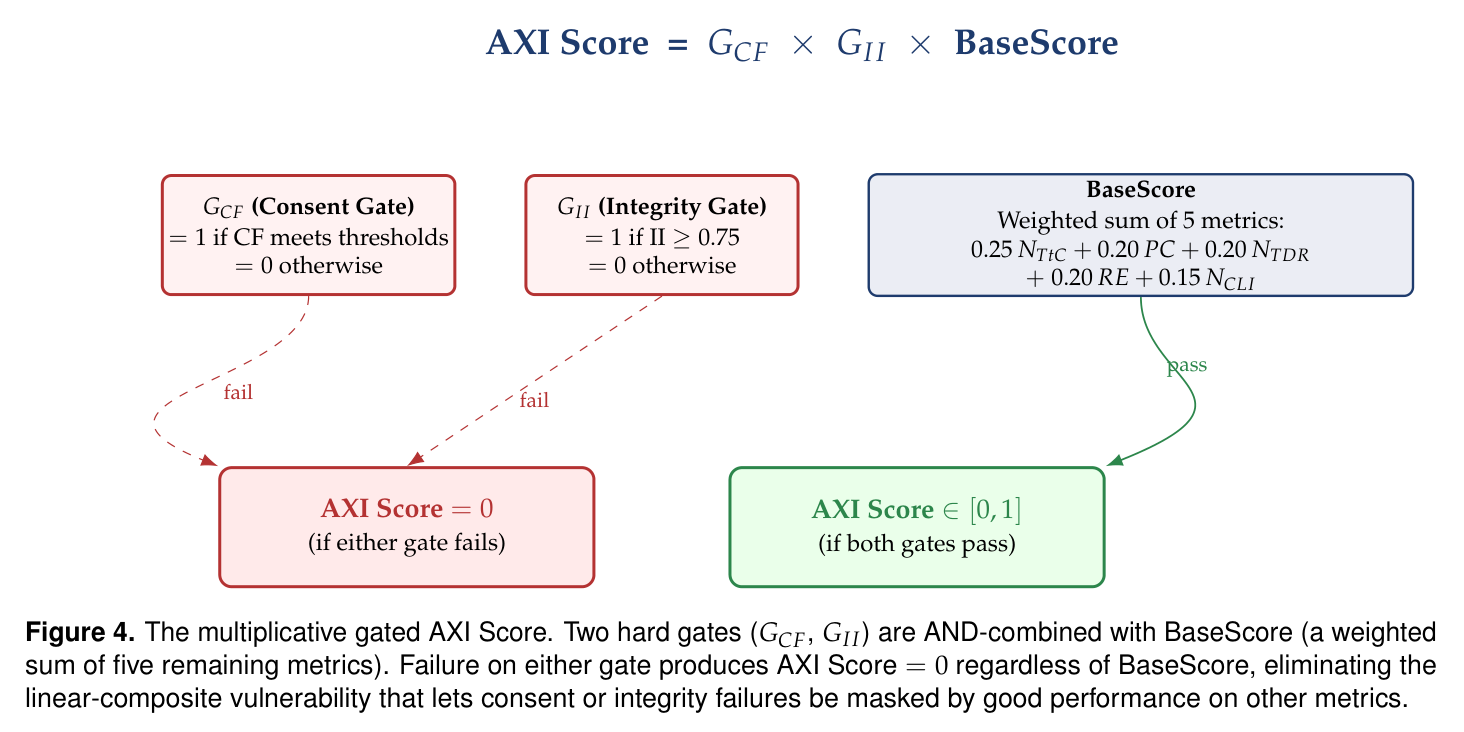
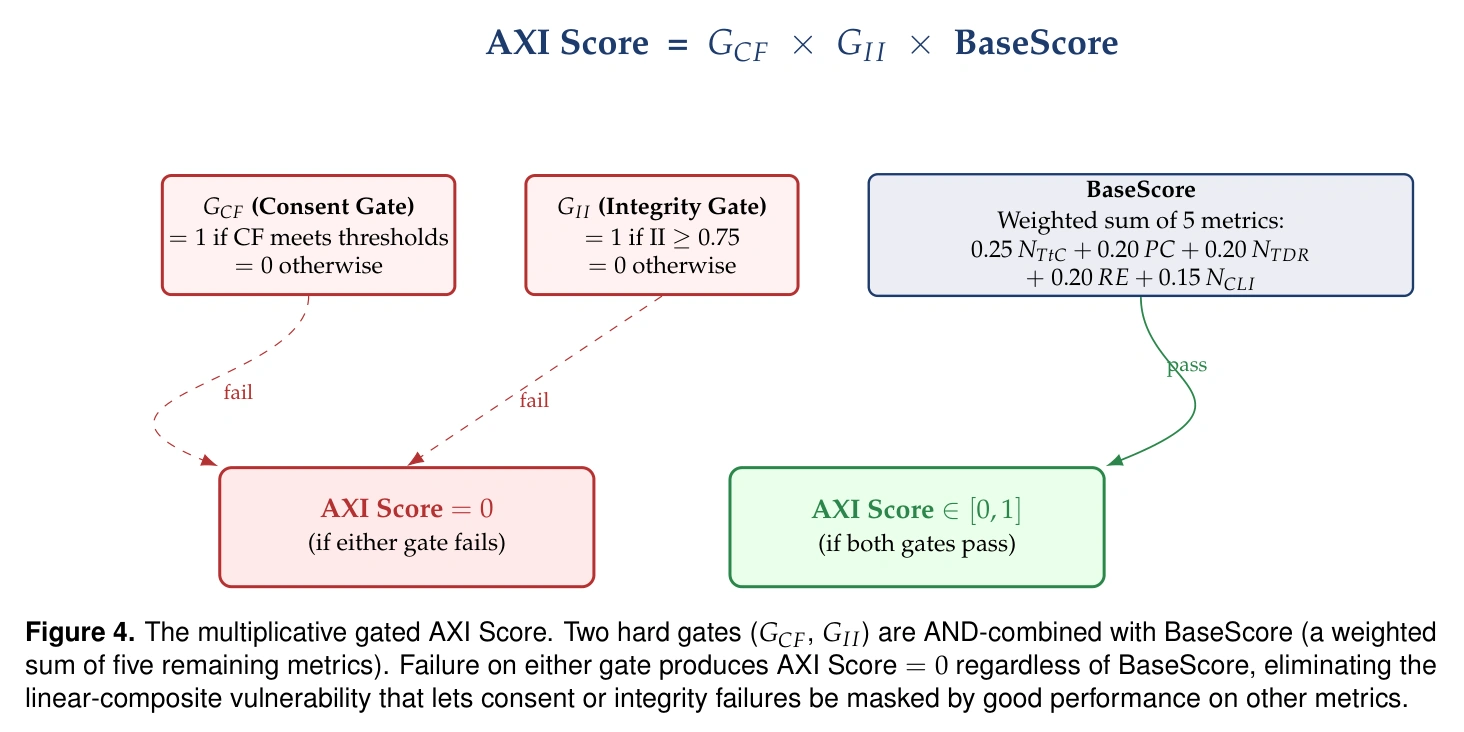
| 4. The gated AXI Score | figure-4.png | figure-4.webp |
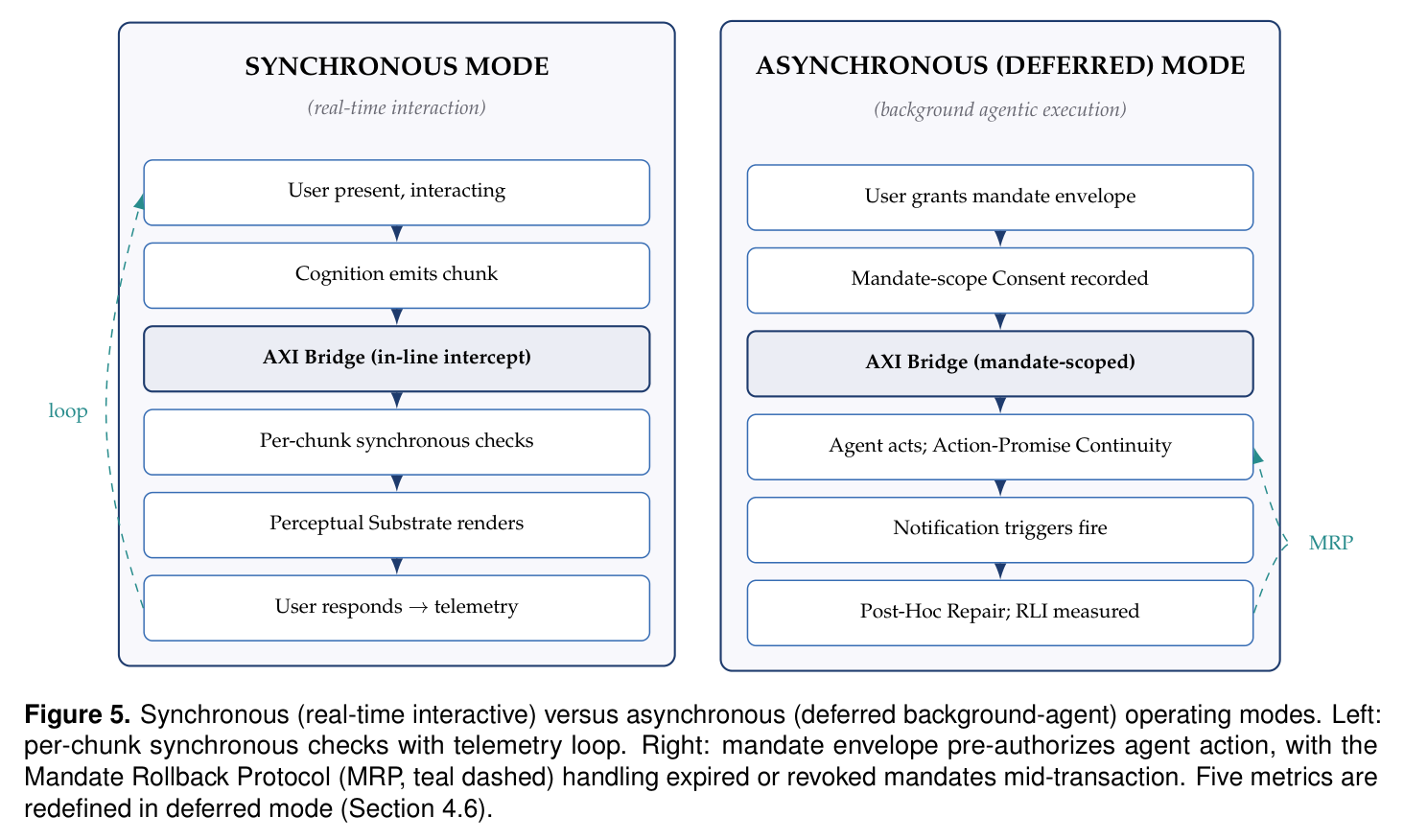
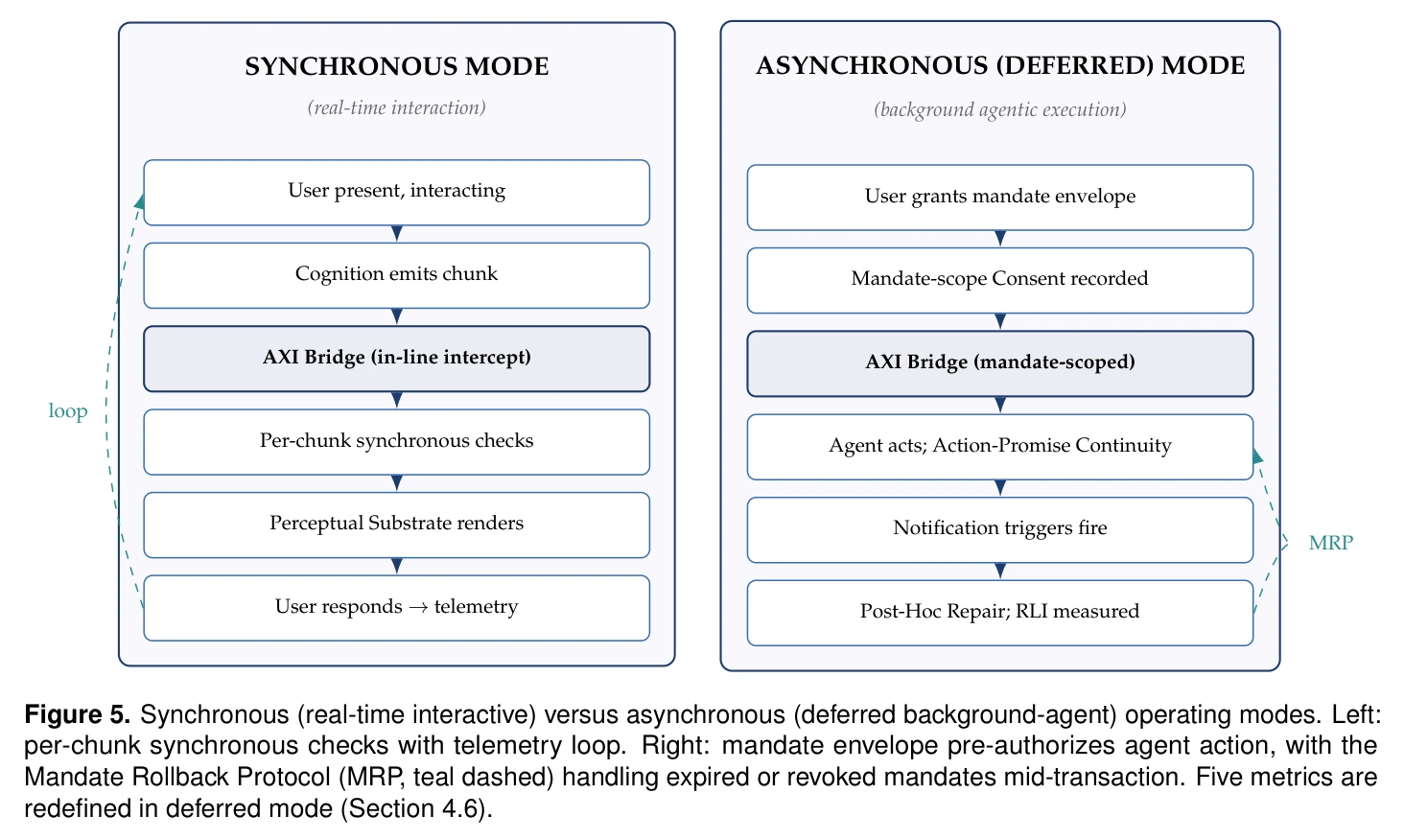
| 5. Synchronous vs. deferred modes and the MRP | figure-5.png | figure-5.webp |
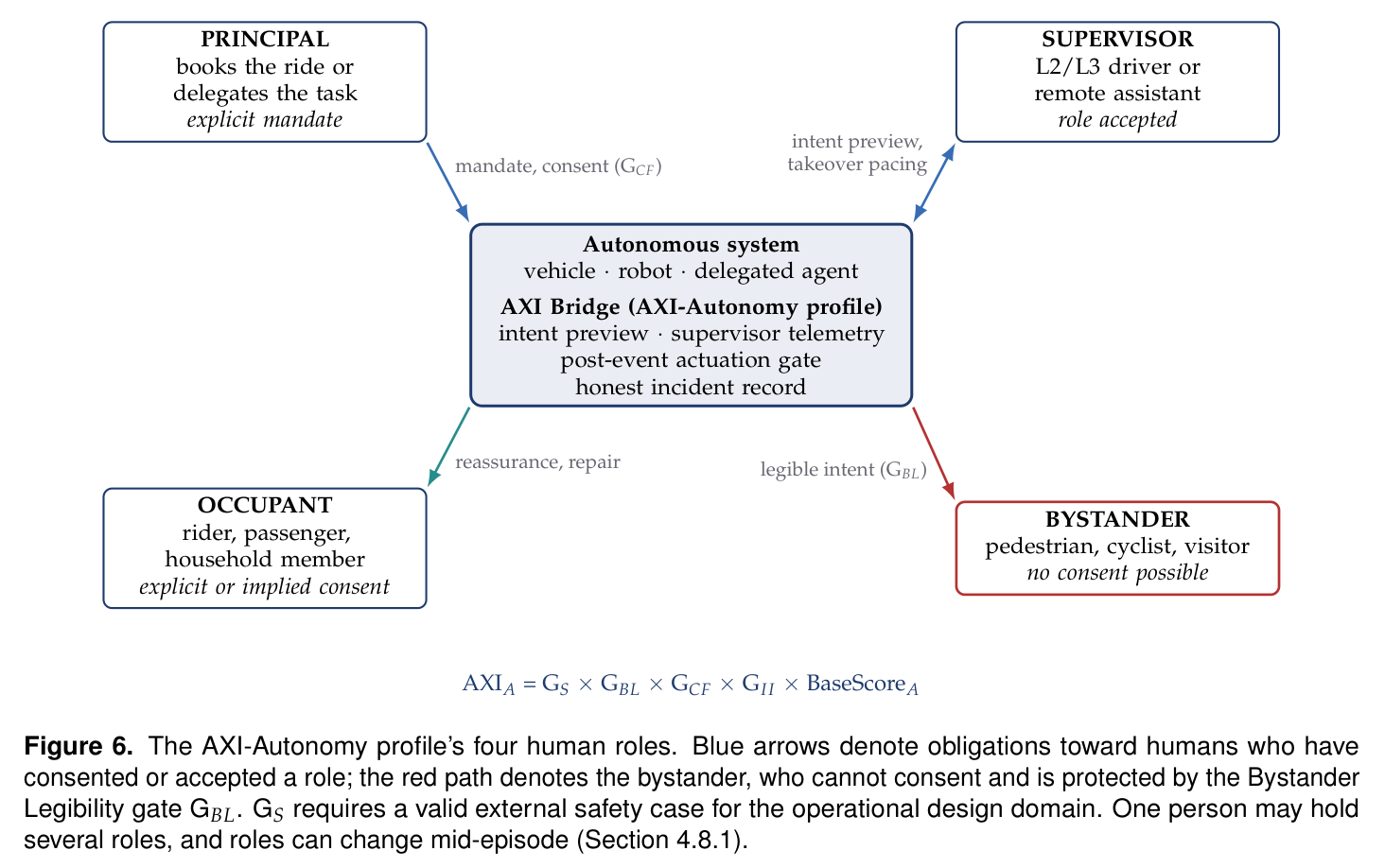
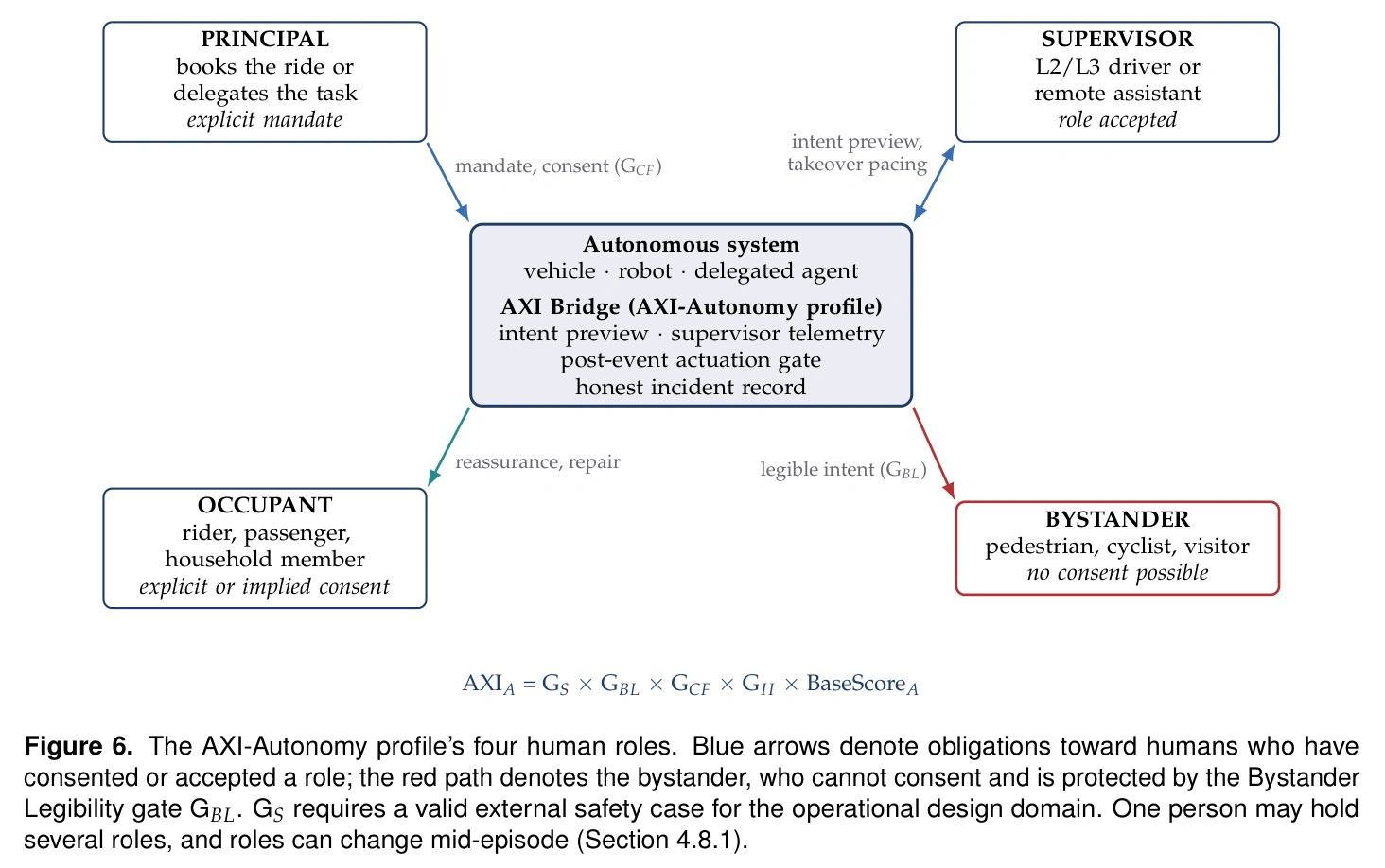
| 6. AXI-Autonomy's four human roles | figure-6.png | figure-6.webp |
Test fixtures and specification data
| File | Contents | Version |
|---|---|---|
| axi.json | Specification as JSON-LD: stack, Bridge, principles, guardrails, metrics, score formulas, profiles, conformance tests | Spec v2.0 |
| axi-incident-coding-v2.0.csv | The author's coding of the paper's eight incidents with the Appendix B fields and primary sources | Spec v2.0 |
| JSON Schemas | BridgeConstraint, BridgeTelemetry, ConsentRecord, TrustLedgerEntry, MandateEnvelope and the conformance trace; list in the docs | Spec v2.0 |
| axi-design.md | Checklist for applying AXI when planning or reviewing an AI system | Spec v2.0 |
| axi-score-evaluation.md | Step-by-step AXI Score computation from telemetry | Spec v2.0 |
No datasets, participant data or benchmark results are published here because none exist yet. Seeevidence status.
Protocols
- Reference measurement protocol (Appendix A): unit, window, data source and missing-data rule for each metric.
- Incident coding protocol (Appendix B): inclusion criteria, decision rule, and agreement statistics for re-coding.
- Validation protocol (§6.3): four studies and a reliability check specified for pre-registration.
Glossary
- Artificial eXperience Intelligence (AXI)
- An engineering discipline, proposed in the v2.0 paper, for the human experience of AI systems: how they communicate with, act for, and operate near people. Unrelated to the Arm AMBA AXI bus protocol.
- AXI Bridge
- The runtime control plane between AI capability and human cognitive bandwidth. It intercepts output and action intents, consumes telemetry and sends constraints back to the other layers.
- AXI Stack
- The five-layer reference architecture: Perception, Cognition, Action, Perceptual Substrate, and Experience (the Bridge).
- Perceptual Substrate
- How the system is perceived: voice, avatar, kiosk, robot body or vehicle.
- Consent Broker
- Bridge component that gates perception, memory writes, actions and identity claims on a current, granular, revocable consent record. Fails closed.
- Trust Ledger
- Append-only, tamper-evident record of commitments, consent grants, errors and repairs.
- Commitment-class fact
- A stated preference, system promise, user correction or confirmed boundary that the system must honour in later sessions.
- Mandate envelope
- A signed authorization for deferred (background) agent action, listing allowed action classes, hard bounds, notification triggers and duration.
- Mandate Rollback Protocol (MRP)
- The four-step procedure when a mandate expires or is revoked mid-transaction: safe-point check, grace period, rollback or high-priority ledger entry, user notification.
- Irreversibility class
- A label on each action event saying whether and from when it can be undone; irreversible actions require explicit confirmation.
- ANBE
- Asynchronous Non-Blocking Evaluation: Bridge mode for very fast inference in which only consent (and, in high-stakes contexts, integrity) checks block output.
- Action-gateway interlock
- Independent component in front of the Action layer that denies requests without a valid Bridge authorization and a fresh Bridge heartbeat.
- Deception Guardrails
- Seven hard requirements on AI identity, emotion, biography, vulnerability, scope and provenance.
- Conformance profile
- One of four nested requirement sets: AXI-Core, AXI-Interactive, AXI-Agentic, AXI-Autonomy.
- Interaction Integrity (II)
- Proposed metric combining accuracy, calibration and scope from adversarial probes; it drives the integrity gate.
- Consent Fidelity (CF)
- Share of events covered by a valid consent record at the time of the event; it drives the consent gate.
- Sycophancy probe
- A test input that invites agreement with a false premise, flattery or endorsement of an unsafe plan.
- Bystander Legibility (BL)
- Proposed share of intent-relevant manoeuvres near vulnerable people that are preceded by a perceivable intent signal at least t_lead (illustratively 2 s) before onset.
- Time-to-Readiness
- Seconds from a takeover request to verified supervisor readiness (autonomy profile).
- Principal, supervisor, occupant, bystander
- The four human roles in AXI-Autonomy: the person who delegates, the person who monitors, the person who rides along, and the person nearby who cannot consent.
- Fail closed
- Missing gate data counts as a failed gate, never as an assumed pass.
- Human–AI interaction (HAI)
- The study and design of how people and AI systems communicate, collaborate and build trust. AXI turns its guidelines into runtime requirements.
- Human–computer interaction (HCI)
- The field that studies and designs how people use computers, centred on usability. AXI builds on its principles of consistency, feedback and recovery and optimizes experience quality instead.
- Human–robot interaction (HRI)
- The study of how people and robots interact; its notion of legible motion underlies AXI's Bystander Legibility.
- Human factors
- The science of designing systems around human capabilities and limits, including trust in automation, complacency and takeover time.
- Trust calibration
- Matching how much people rely on a system to how capable it actually is; both overtrust and undertrust are failures.
- Human–AI bridge
- A layer that connects AI capability to the people it affects. In AXI this is the AXI Bridge, a runtime control plane.
Notes on use
- Metric weights and thresholds are the paper's default values (§4.5.8).
Open research questions are listed on the research overview.